by Daniel Cohn-Postar
Scale: Not stated
- Crew: 1
- Armaments: 2X 30mm Kinetic Energy Weapons, 4 Internally-Carried Missiles.
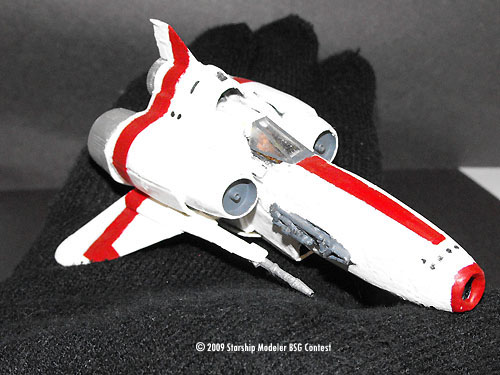
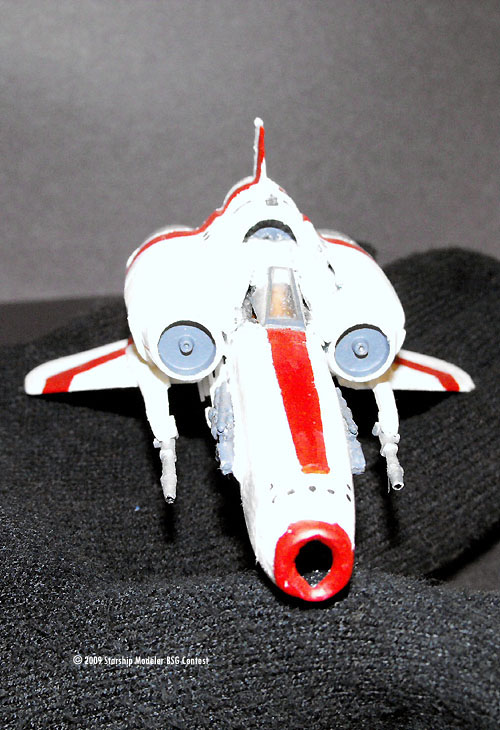
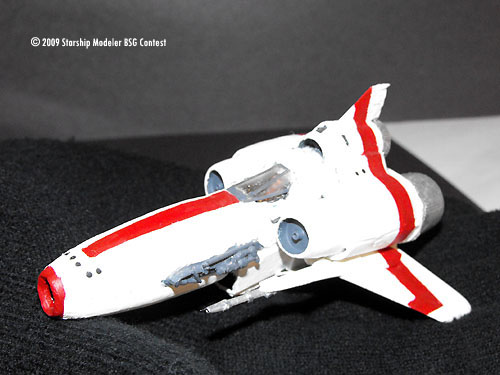
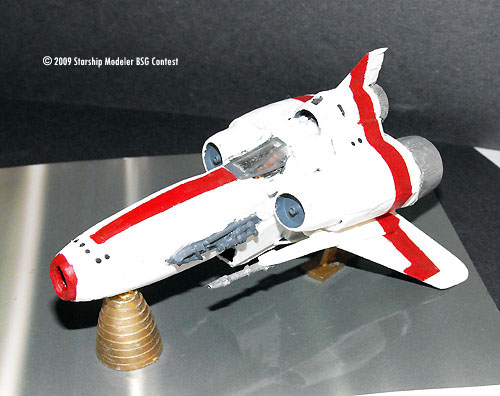
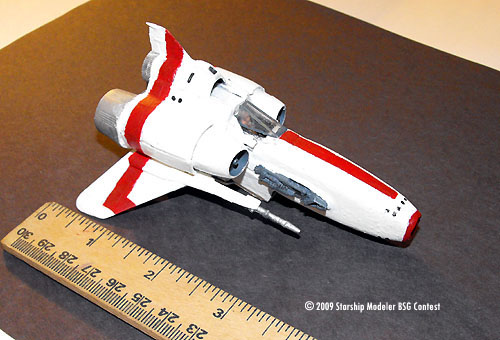
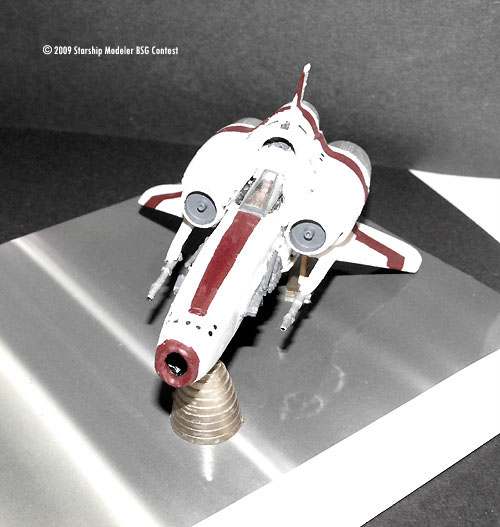
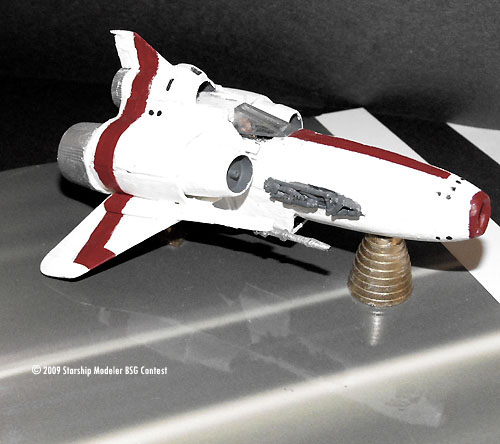
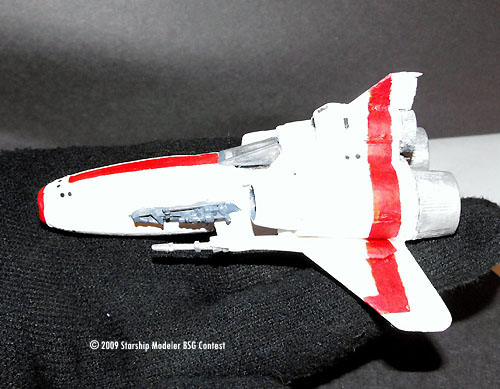
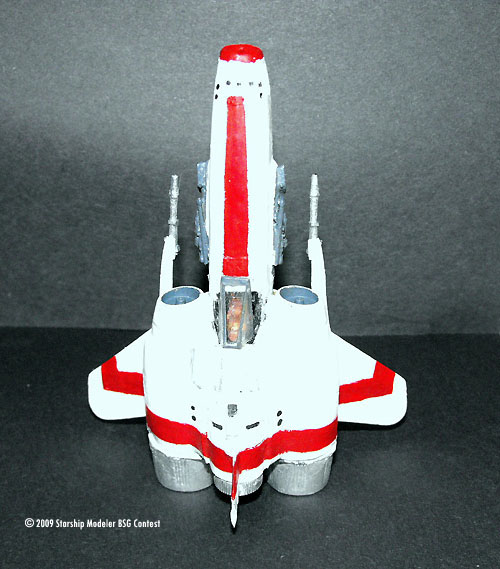
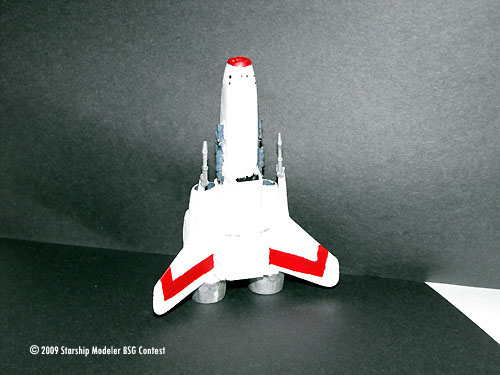
At first appearing to be a smaller, less-streamlined version of the famous Viper Mk II, the original Viper, the progenitor of the illustrious craft in service with our fleet today was designed in a crash program as a general-purpose fighter for the newly united Colonies in the early days of the Cylon War, by Capricon Dynamics.
It is famous not only as a groundbreaking fighter but also for its short development time, going from the drawing board to a test flight in only four months, where it performed well, although was slightly underpowered.
Due to a shortage of available fighter craft early in the Gemenon Campaign, the prototype was rushed into full-scale production, and the fuselages were mated to modified Gemenese Hermes-type engines (formerly featured in prewar racing craft). The new Viper was maneuverable, and although it was a bit short-legged (less fuel carried in a smaller frame), pilots and knuckledraggers alike quickly fell in love with the deadly little package. 3000 of these served with the Fleet before being replaced by the even more famous Viper Mk II.
The one seen here was the fifth off the production line, and managed to survive the Gemenon Campaign (mostly) intact, restored by funds from the Veterans' Society.
(My backstory for the Viper Prototype was inspired by the development of the P-51 Mustang of World War II.)
I love the show Battlestar Galactica, especially the ships and asthetics involved. As the Viper models I saw online were so expensive, I decided to try and make my own Viper-type craft. When I saw a marked-down Yak-15 (an early Russian jet fighter,) in my hobby shop, I immediately thought- retro Viper Prototype, bought it, and set to work.
This was my first time extensively modifying a fuselage piece of an aircraft. I had to plan my cuts and the fuselage build-up carefully to achive the look I was going for, a slightly unfinished and bulker version of the Viper, and a worthy progenitor to the Viper Mk II.
I used its nose and main fuselage section, cutting off the tail near the end of the cockpit to build up the tail section. The instruments on the sides of the fuselage were from my parts bin.
![[Starship Modeler's 17th on-line modeling contest: Battlestar Galactica]](bsgbanner.jpg)